About
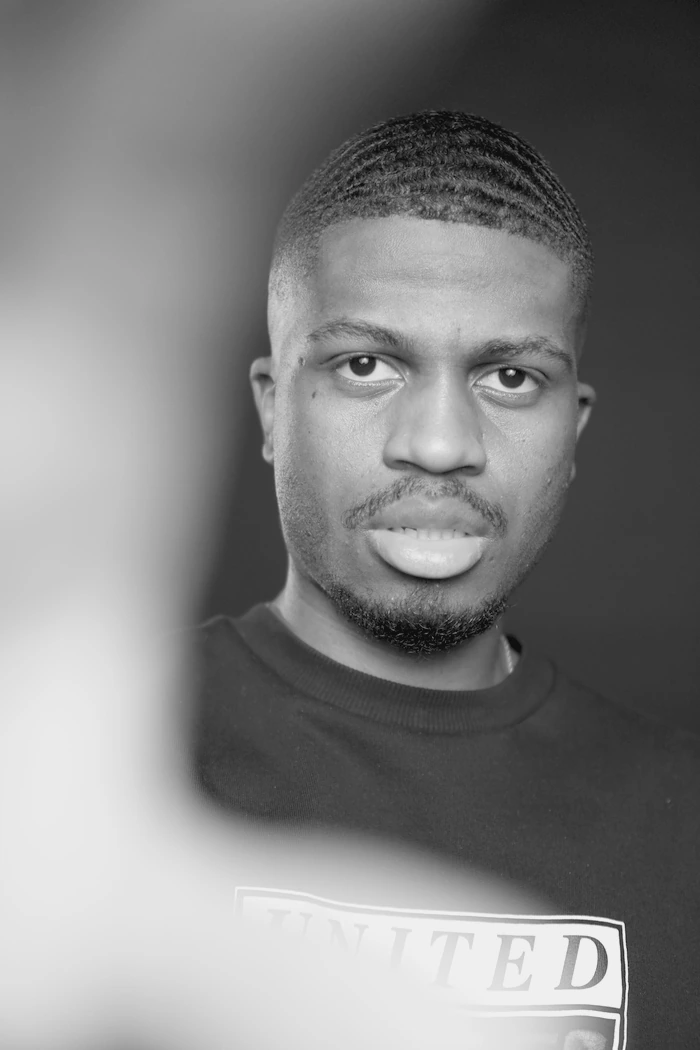
- Based
- Lilongwe, Malawi · UTC+2
- Working since
- 2017
- Languages
- English, Chichewa
- Education
- BA Film & Media Studies, University of Rochester, 2023
- Status
- Open to a full-time content strategy role, remote from Lilongwe (UTC+2) or relocating. Taking select freelance work.
Most of what I do starts with something people already carry. A founder's know-how. A family's grief. A song everyone at a wedding knows the words to. It's real, but it has no shape, so nobody else can use it. I give it a story and a system, and I hand it back built to keep running after I leave. I've done that for nine years, in client work and in music. It's the same job in both.
Leaving Johannesburg, then Rochester
I left Lilongwe in 2016 for the African Leadership Academy in Johannesburg. A year later, still in school, I started editing Zonse Live, a weekly music and culture show back home. It was unpaid, and I taught myself to edit as I went. Two seasons, twenty-three episodes, every one cut remotely, first from Johannesburg and then from Rochester, New York. So I learned remote work before I learned anything else about the job. You hold the schedule yourself, because nobody is standing over you.
Rochester was a film degree, Film & Media Studies. It gave me the idea I've used everywhere since: every medium has rules for how it makes meaning, and once you can read them you can build inside them. Film first, then social. At the university's career center I rebuilt the Instagram around turning long blog posts into Reels, and reach went up 111 percent, for an audience that was only students and recent alumni. Then came a Vermont-based marketing agency, a marine towing brand and a garden retailer. None of those subjects is glamorous. Each one got a clear story and a steady schedule, and each one found its people.
Hearing SMPH, since 2021
In 2021 I started making music as SMPH. Afro house, mostly, and the sounds around it. I came to it the way I'd come to editing: self-taught, at a point when picking up a new tool felt natural, and surrounded by friends who were already making music. For years I reworked songs people already love, one every Friday, and tracked each release like a client account: how long people stayed, who clicked, what the artwork did. Reworking other people's songs taught me how to hear. Now I'm writing my own, about coming home.
The music also taught me the thing I most want clients to understand. On YouTube my remixes can never earn anything, because the songs aren't mine. The platform owns that room. So the money comes from rooms I can stand in: live sets, including four for The Sunday Soirée since 2025, and sessions I build myself. For the African Leadership Academy I designed a class on the log drum, tracing it from talking drums to amapiano to global pop. Then the room took over: 28 students hunted down 57 tracks and built a shared playlist. What you rent can vanish. What you own grows.
Home Lilongwe, since 2024
Where I'm from, people assume you have to leave to make it. I did leave. In 2024 I came back, with a remote practice built before I landed. Since then I've worked for clients in the US, the UK and across Africa from Lilongwe.
The work got bigger here, not smaller. I co-founded Peza, a travel media company, and edited a launch Reel for House of Tales, a Lilongwe hospitality brand, that reached 39,000 views with no ad spend. I interviewed thirty-two African artists for the Boistory Foundation about money and how they work, and heard the same thing almost every time. The talent was there. The system was never built with them in it. And I went back to the school I'd left. I taught at its Global Scholars Program in 2024 and 2025, and in 2026 I directed one: seven educators, forty-six students, an NPS of +62.
I'm open to moving for the right role. I've done it twice. I just don't need to move to do the work well.
Next The part I want more of
What I want now is the part I've been doing in pieces: setting strategy over years, not quarters, and leading the people who carry it out. My best work came when I owned it. When Haider Jabbar's strategist left, I took the plan over and kept it running week after week. At GSP I answered for seven educators and every schedule that broke.